Poruba pod Vihorlatom
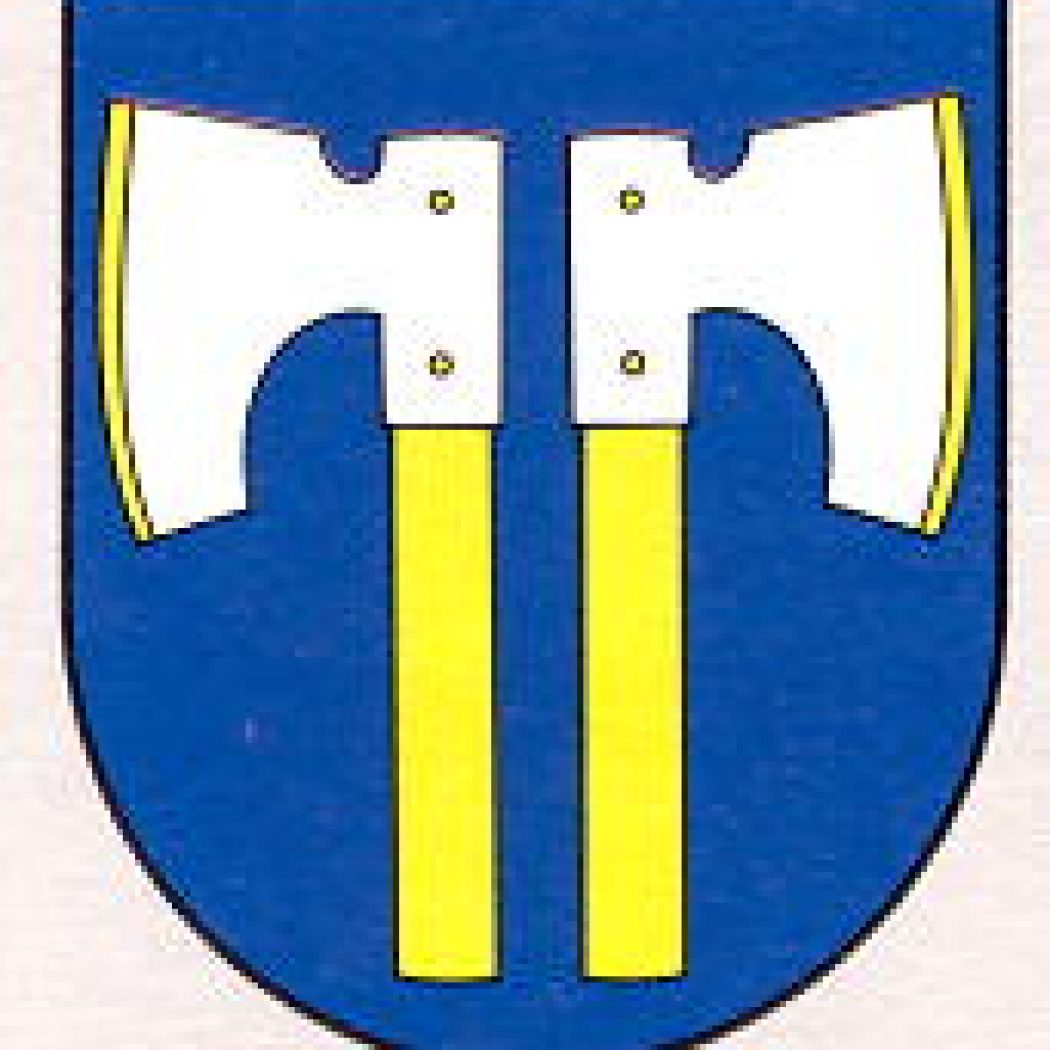
Poruba pod Vihorlatom sits in the northeast part of the Hungarian Plain, south of the Vihorlat Peak in the Carpathian Range. The village is located in the former Hungarian county called Ung, and historically belonged to the Greek Catholic Parish of Jovsa. Jovsa was one mile west of Poruba, but Poruba had its own church.
What locals call Poruba has gone by varied names over the centuries. Német Poruba was settled by Germans in the 15th century; Német and its variations mean “German.” In the early 1900s the Hungarian Németvágás–“German slashing”–was used. Nemecka Poruba was the common name from the 19-teens until after World War 2 when Poruba pod Vihorlatom (Poruba beneath Vihorlat) was adopted.


A Brief History of Poruba pod Vihorlatom
Poruba was founded in 1410 on the southern foothills of the Vihorlat Mountains. The altitude of the village center is 193 meters [633 feet]. In the year 1427 the village had 18 [homes?] and by 1828 there were 88 houses and 522 inhabitants. Today the village has 176 buildings and 603 inhabitants. The village was built on the banks of the Porubský creek so that economic buildings (masts and chalies) were built closer to the stream and the creek crashed between the houses and was hardly stagnant.
The first inhabitants of the village were German colonists. After a while they moved closer to the source of iron ore and founded the new village of Remetská Hámre [3 miles distant, as the crow flies]. Here an iron foundry manufactured ironware until 1922, when the foundry burned down. It was never rebuilt. A narrow-rail railway was built, not only for the picking of ores, but also for the removal of wood into the woodwork in Michalovce.
New settlers “Rusini” came to the village. The inhabitants were farmers and besides this work they worked in the woods making charcoal. They were very skilled carpenters. They crafted ties for the needs of railways and beams for the construction of wooden family houses.
Stonework was another practice. The village produced andesite cobblestones and curbs which were used for pavement of the road between Kosice – Uzhhorod. This work was carried out until 1955
During the First World War, the water mill of the Hámorsky family, built on the Porubsky stream, disappeared [was destroyed?].
In 1938-1939, Ján Nálepka was a school teacher in Poruba. His brief activity in the village was a great benefit for the citizens. In a short time, he was able to win the favor of the young.
In 1942 those of Jewish origin were deported from the village. All 128 Jewish citizens were taken to concentration camps. On 3rd and 4th November 1944 the Fascists fired [burned] the village. Particularly they focused on the synagogue. Even 60 cm stone walls did not resist destruction. After the burning, they also removed the walls. The village was liberated by the members of the Red Army on November 24, 1944. After the liberation with the help of the state the village was rebuilt.
[This next paragraph was poorly translated so I completely rewrote it] About the time Ján Nálepka lived in Poruba, the village mayor was or had been Michal Ihnat. Economic buildings [businesses?] were moved behind the houses in order to build a road in front of the houses. Even though the road is now dilapidated, “it goes” as Janko Sticker puts it. His work and his life are captured in a memorial room, which is installed in the elementary school and bears the name “Ján Nálepka Memorial Room”. This room is part and tradition of this village.
NOTE: the above taken from this website, run through Google Translate, and further edited and rewritten by sbw:
http://www.poruba.eu/index.php?id=historia
NOTE: Jewish population 1880 was 126 according to www.jewishgen.org
Agrarian Practices in Poruba
My Baba was born in Poruba in 1896. These are her memories.
Up until about 1848 this area of Eastern Europe was still organized in the pattern of the manorial system, that is, it was covered by great estates owned by the aristocracy, but worked by the common people who were called serfs. When the estates were dissolved, the serfs became free to purchase some land if they could. By the dawn of the twentieth century, most village families owned and cultivated their own piece of land. In the parish records a landowner is noted in Hungarian as ‘gazda’ and someone who worked the land of another was a ‘zseller’ [the same as ‘cottager’ in some countries]. The number of men designated as gazda increased as the years passed.
The village farmers worked in cooperation with one another to raise their crops and tend their animals. Each farmer’s acreage extended out from the village in parallel contiguous strips. Each one grew the same crop in the same year, rotating to a different crop the next year. The village women worked in the fields as well as tending to their household duties.
Though individually owned, the animals were herded together. By five o’clock each morning the cows, sheep and goats were turned into their yards. Men assigned to care for them herded the animals into the woods to graze and returned them home in the evening. Baba thinks this job was done by younger sons who had no land to farm and who were paid either in cash or in bushels of grain or other crops.
In the summertime school children, including Baba, had the job of pasturing the animals each day. It was hard work to move the animals up into the woodsy foothills of the Carpathian Mountains, but once there the children had a little time for relaxing and playing games while keeping one eye on the animals. They brought lunch with them, usually a few raw potatoes which they roasted over a fire they built. After dark the young people told stories around the fire and were sometimes frightened by ghosts that spooked their animals and seemed to inhabit the mountains after sunset. The ghosts made such an impression on the children that in later years they were a favorite topic when relating experiences about the old country. One of the few things I know about the childhood of my grandfather, John Bubnash, is that he truly believed in ghosts, for he had experienced them while herding sheep in the Carpathian Mountains.
Agrarian life was not without its hazards. When Baba was six or seven years old she went near the barn where the threshing machine was running and foolishly began to play around the machine. The belt caught her left index finger, nearly ripping it off. Somehow she managed to get her hand out without sustaining a more serious injury. The finger was skillfully sewn and bandaged by her mother. Her finger healed well enough to be usable, though it was crooked all of her life.
Religion Among Carpatho-Rusyns


St. Michael the Archangel Byzantine Catholic Church, and its iconostasis. The church was built in Nová Sedlica about 1754, and moved to the Humenne Skanzen about 1974, for preservation purposes.
Eastern Slovakia was steeped in Carpatho-Rusyn and Slovak religious tradition, with both Greek and Roman Catholic churches being strong. Slovaks were ordinarily Roman Catholic and Carpatho-Rusyns, Greek Catholic, now called Catholics of the Byzantine Rite.
Byzantine Catholicism came about as follows: Portions of Central and Eastern Europe had been of the Eastern Orthodox religion since the schism between the Bishops of Rome and Constantinople in 1054 AD. Those of the Eastern Orthodox faith living in areas dominated by Roman Catholics, namely Carpatho-Rusyns, were treated as second-class citizens. In the 1646 Union of Uzhhorod, Carpatho-Rusyn clergy joined with the Roman Catholic Church, with the stipulation that their churches would retain their liturgical language and distinct Byzantine religious customs. The result was the Uniate Church, most commonly referred to as Byzantine Catholicism.
The Byzantine Rite differs in tradition from the Latin Rite, or Roman Catholicism. Children are confirmed during infant baptism, rather than in young adulthood. Communion is taken in the form of bread and wine. Marriage for priests was always permitted until prohibited in 1929 due to the objection of Roman Catholics. It was re-instated in 2014. The Divine Liturgy is celebrated in Old Church Slavonic, a Slavic liturgical language, and the congregation participates in the liturgy, led by a cantor. Symbolic three-barred crosses top Byzantine churches. Churches are often built and decorated in an eastern-flavored Old World style with gilded onion domes outside, and exquisite, intricate mosaic work inside. Walls and ceilings are painted with icons, as is the iconostasis, a large screen that separates the congregants from the altar. Worshippers in a Byzantine Catholic church are accustomed to the sweet aroma of incense which permeates the building, as the priest burns it during the Liturgy.
Baba recalled old traditions associated with Easter, a special time dedicated to the resurrected Christ, coinciding with the coming of spring. During the week leading up to Easter women prepared special meats, breads and pastries for the Easter meal. These items were packed into roomy baskets and taken to church on Easter Sunday to be blessed by the priest. Pysanky (Rusyn or Ukrainian Easter eggs) were decorated with wax and natural dyes to create stunning flowered and geometrical designs of every color. What a lovely and symbolic gift to receive at Easter time. On Easter Monday young men called at the home of a favorite young woman hoping she would be the person to answer the door, and regardless of which female did answer, she was doused with a bucket of water. Girls too young to be seriously interested in boys avoided the front door on this day! The custom was reversed on Easter Tuesday when the young women did the same to the young men.
More information about Byzantine Easter traditions is found here http://www.archpitt.org/byzantine-easter-traditions-the-blessing-of-easter-foods
Some former residents of Poruba
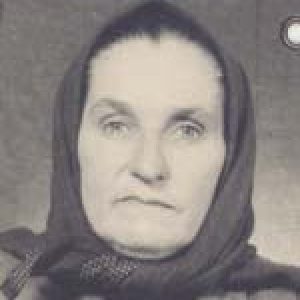
Zsuzsánna Firda
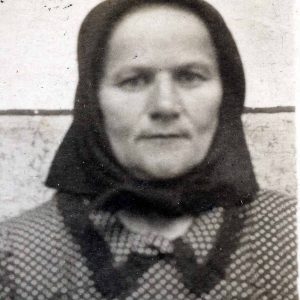
Anna Czuprik
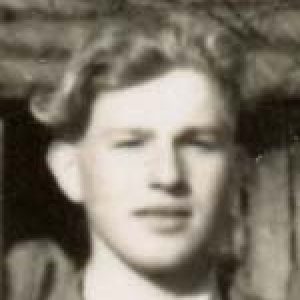
[unknown] Csornej-Maczko
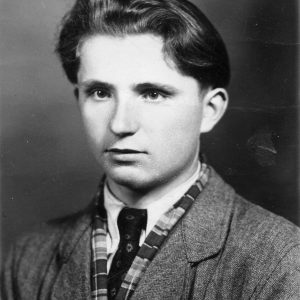
Jan Csurpakovics
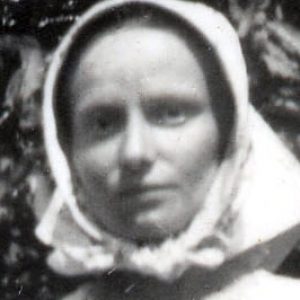
Erzsébet Szemjan