A Carpathian Mountain Shepherd Becomes a Pennsylvania Coal Miner
October 2010
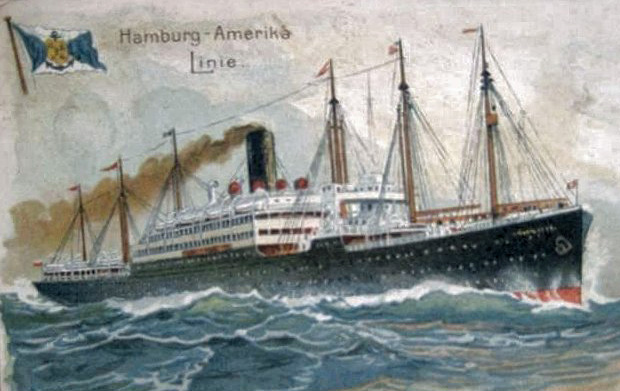
On October 29, 1910, John Bubnaš stepped off the Kaiserin Auguste Victoria at Ellis Island with $24 in his pocket and not a word of English to help him navigate through the unknown ahead. He was bound for Webster, Pennsylvania to join his uncle, Andrew Szorokacs. Light-haired, grey-eyed John stood 5’6″, and before long would be deep in the earth mining coal along side his fellow immigrants.
Grandpa came from Valaškovce, an austere Carpathian Mountain village of plain shepherd farmers. His father Paul died of tuberculosis two months before his birth. Before Grandpa turned two years old, his mother, Mary Szorokacs, married George Luczo and moved her family south of the mountains to Nemet Poruba.
Grandpa left school at a young age to do farm work for his uncle George Bubnaš back on the mountain in Valaškovce. His older brother George sailed for America in 1906 and settled in with uncles John, Andrew and Michael Bubnaš in Stockett, Montana, a coal-mining community that supplied the Great Northern Railroad. George was killed in the Stockett mine in 1909 and buried in Calvary Cemetery in Great Falls.
Grandpa joined the flood of young men leaving Zemplen County for the United States. He traveled to Hamburg Germany in early October 1910. On the 19th he boarded the ship, and ten days later faced his new life in the US. He must have been filled with fear and fatigue, excitement and anticipation. Why he did not travel to Montana to live with his uncles there is anyone’s guess. Life was tough in the coal communities of Pennsylvania, but it was downright harsh in the bleak, barren settlements of western Montana.
By 1912 Grandpa was living in the coal hamlet of Snowden, Pennsylvania where he boarded with Michael Csornej-Maczko’s family. He married Michael’s sister Suzanna in 1912, and eight children were born to them. They moved around the bituminous coal and coke region from Snowden, to Clairton, Monessen, Webster, Donora, Perryopolis, and Star Junction, before settling permanently in Perryopolis in 1935.
Hard times came and went–funerals, miners’ strikes, the Depression, world war, and the crushing mine accident that nearly took Grandpa’s life in 1951. Crippled but not a quitter, he found ways to be productive until succumbing to cancer in 1966.
Grandpa can be pleased that his numerous descendants treasure his legacy of courage, determination, hard work, and model citizenship. 118 years ago he faced west and took the first perilous step toward creating the abundant life we now enjoy.
Grandpa went from this:
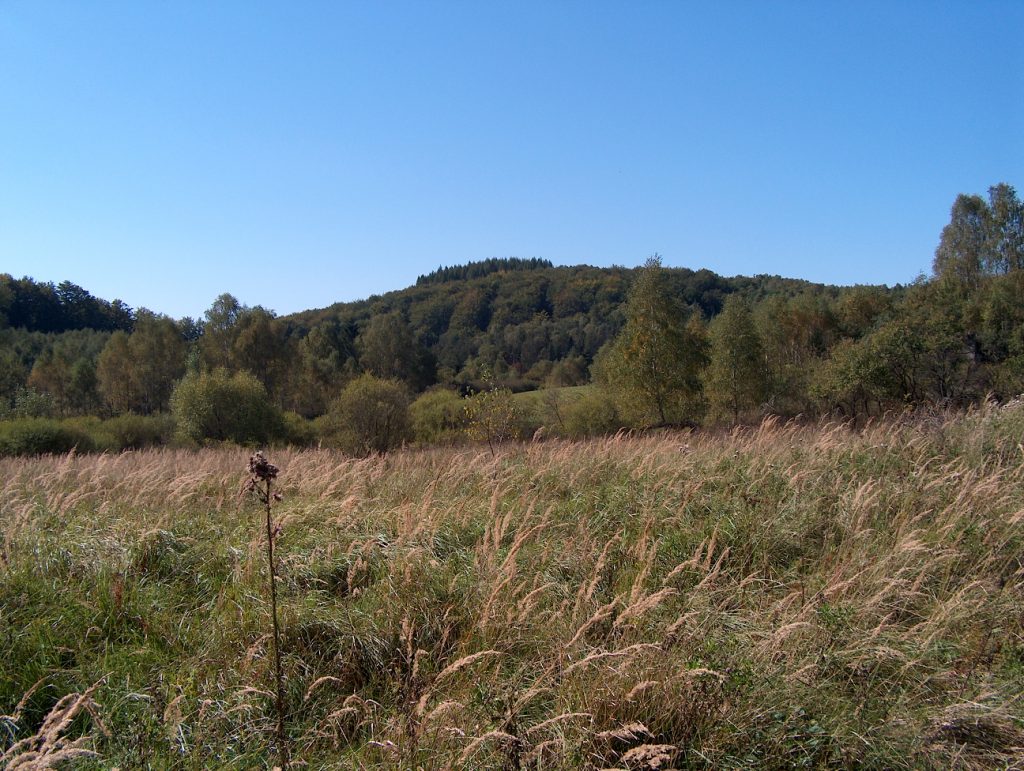
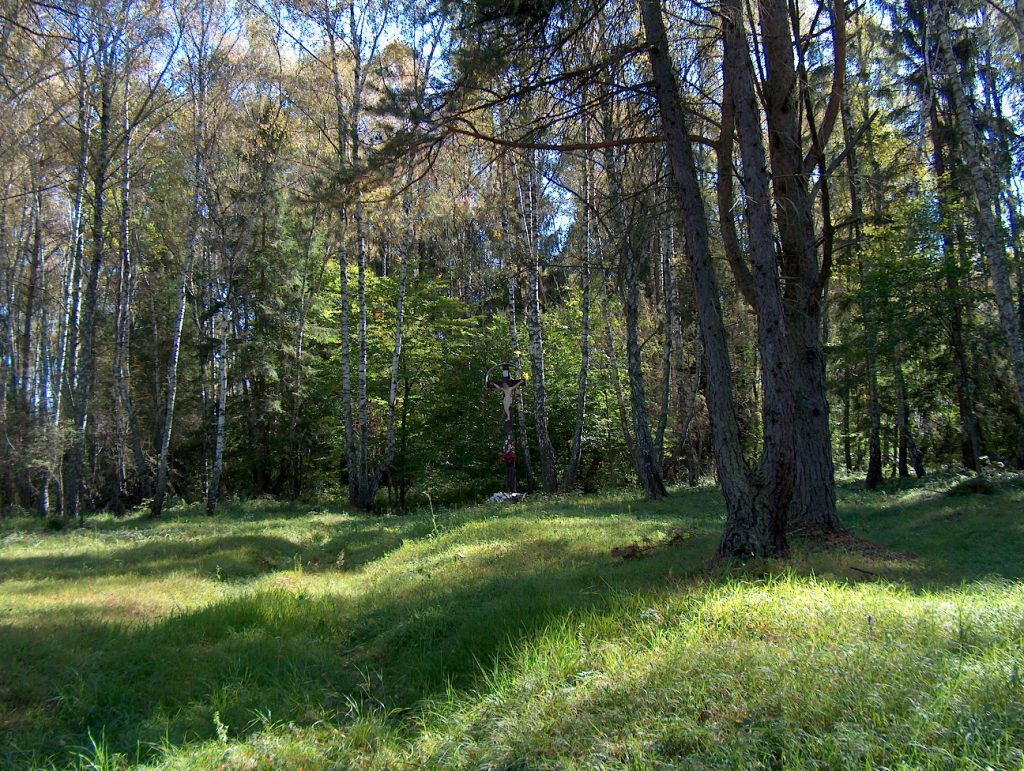
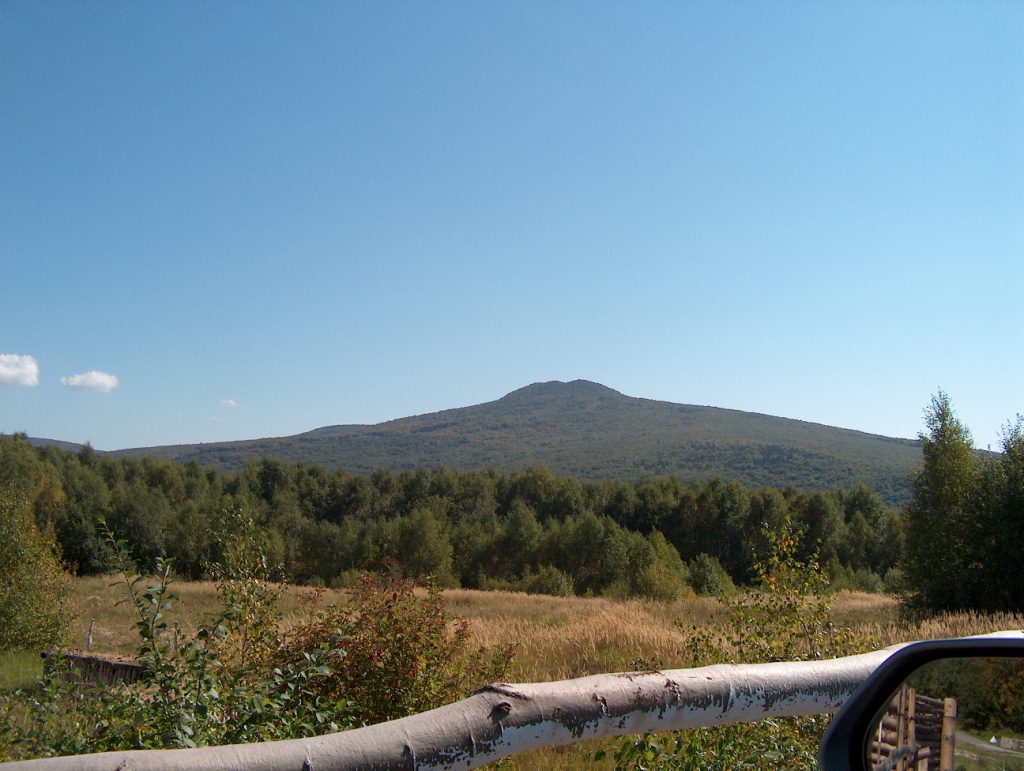
To this:
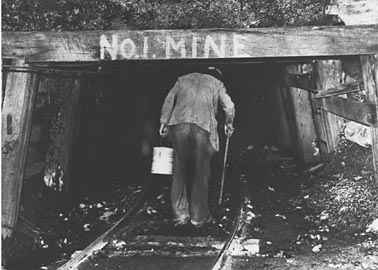
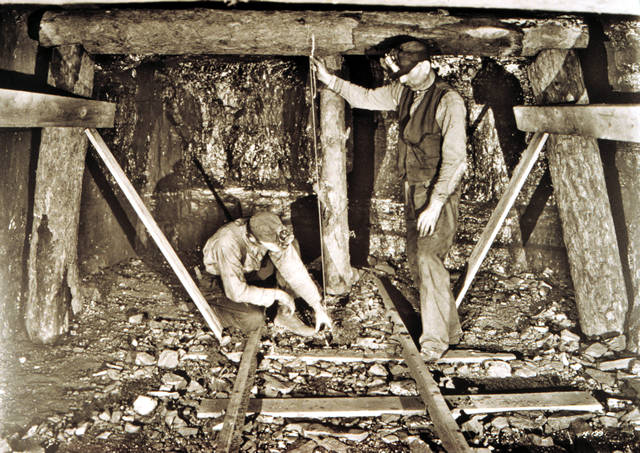
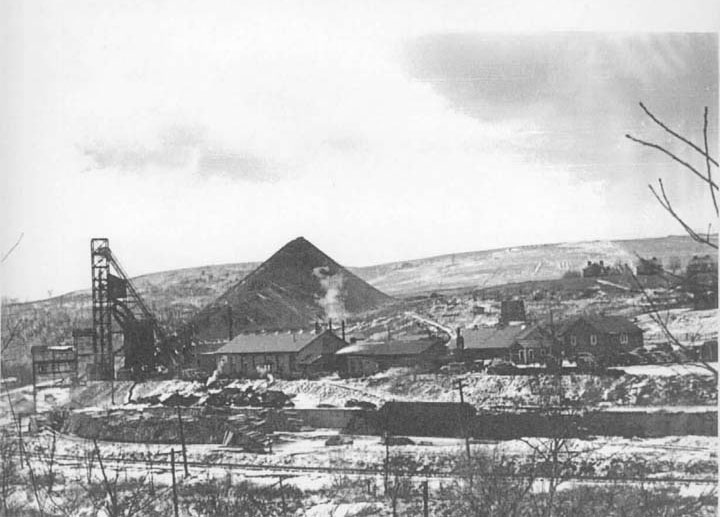
photos of Valaškovce courtesy of Robert Balog mining photos courtesy of www.coalcampusa.com
Poruba to Pennsylvania
December 2011
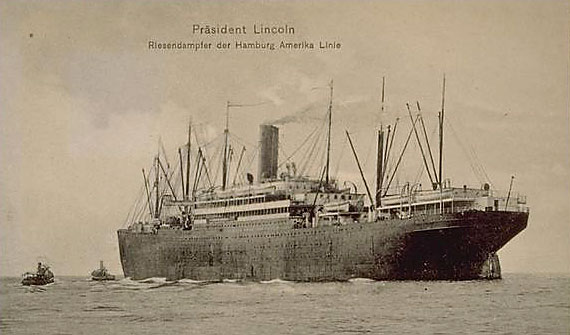
Over one-hundred years ago, in December 1911, my Baba boarded the S.S. President Lincoln in Hamburg Germany to sail for New York. Only a week earlier she had bustled about the home of her sister–her home–gathering what little she owned into her small trunk. Three young women were leaving the village together–Baba (Suzanna Csornej-Maczko), her sister-in-law Mary Szemjan, and a cousin, Mary Szorokacs. Baba was a 15-year-old orphan; the two others were a more ‘seasoned’ 17 and 21 years. As the horse-drawn wagon pulled them away from their homes in Nemecka-Poruba, the three strained for a last look at the hickory-fenced animal pens, winter-fallow fields, white-washed metal-roofed houses, their beloved Byzantine church, and snowy mountain peaks. None of the three would see their bucolic village again.
A winter voyage across the Atlantic was never tranquil or pleasant, and it was markedly distressing for the hundreds of steerage passengers cooped up below decks. The President Lincoln sailed for 12 days, days longer than expected, to reach New York. Perhaps ice or stormy seas impeded the boat. Food was scant and years later Baba admitted to helping herself to potatoes from the kitchen, the only time in her life she stole anything. Seasickness plagued her during the voyage. She was too ill to be enthralled by the Statue of Liberty guarding New York Harbor on the cold December day of their arrival. The temperature was near freezing with a light rain falling.
At Ellis Island the manifest shows all three girls carrying $17 each. Baba is recorded as 5’3″ tall, with light hair and blue eyes. Yes, she had the most singular cornflower blue eyes! She was nervous about the mandatory health inspection. Immigrants well knew that a slight symptom of disease could bar them from entrance into the United States.
With great relief they passed inspection, found the train bound for Pittsburgh, and set off on a new stage of their journey.
Mary Szemjan’s brother Michael was not waiting at the train station in Pittsburgh, as expected. Without any English, the distressed girls managed to hire a wagon and driver for five dollars to take them to the Oakland section of Pittsburgh where Mike lived. Baba stayed with him for a few days until her brother Michael arrived to transport her to his home in Snowden. He was a coal miner and his wife ran a boarding house for single miners working at the Crescent Mine.
She found a job in Clairton working as housekeeper for a Jewish family who owned a store. The most direct way to Clairton was to walk on the railroad tracks, and that’s what Baba did. Six months later Michael arranged for Baba to marry one of the single miners boarding at his house, John Bubnash. She objected! She was too young to marry. Michael insisted, and the marriage took place one month past her sixteenth birthday, on July 20, 1912, in Clairton.
Reminiscing seventy years later, Baba wistfully recalled her naivete. She expected life in America would be easier, less laborious than in Poruba, yet it was anything but that. The stress of making ends meet for a family on a coal miner’s salary, and the labor on a failing farm was interminable. She had moments of nostalgia for home, yet Pennsylvania gave her more to hope for. Her parents had died in her youth and survival was capricious in her farming village. Less than four years after her departure from Poruba, World War One broke out, and 20 years after its end, World War Two. Villages such as Poruba that stood in the way of the military advances and retreats suffered terribly, and she felt lucky to not experience the horror firsthand. She led a humble, admirable life and died at age 100 in 1996.

Baba’s Ellis Island immigration record (partial)
Line 19: Sirokas Maria, 21, female, single, house m., nationality: Hungary, race: Slovak, last residence Mohnadagas**, relative in old country: father Janos Sirokas, Mohnadagas. Line 20: Csarney Zuzana, 17**, fem, single, house m., nationality: Hungary, race: Slovak, last residence Nemetvagas, relative in old country: sister Maria Csarney, Nemetvagas. Line 21: Semian Maria, 17, fem, single, house m., nationality: Hungary, race: Slovak, last residence Nemetvagas, relative in old country: mother Ann Semian of Nemetvagas. **Maria Sirokas was born and raised in Nemetvagas. It appears that her village name was misunderstood by the clerk recording the information. Baba was barely 15 1/2 years old. She upped her age to ensure she would not be sent home as she had no parent or guardian with her. NOTE: There is more information on the manifest. Maria Sirokas was bound for New York to her uncle John Skovacsik. She stood 5’4″ with dark hair and grey eyes. The younger two were headed for Pittsburgh to Mary’s brother Majk Semian. Both were 5’3″ with light hair and blue eyes and were born in Nemetvagas. All three carried $17.
An Arranged Marriage
November 2013

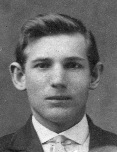
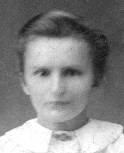
“An arranged marriage,” a quaint phrase if there ever was one. It conjures up images of lacey-veiled brides meeting their husbands for the first time at the altar. How priceless to have been a fly on the wall on those occasions. Would the bride’s expression on seeing her husband for the first time have been:
Relief? (he’s dreamily handsome and / or prosperous)
Revulsion? (the local skirt-chasing seducer)
Dismay and disgust? (weighs 300 pounds with powerful BO)
Terror? (previous wives died in mysterious unexplained circumstances)
Despair? (a passel of motherless children)
Crushed and crestfallen? (60 years old)
In my family “an arranged marriage” was a reality only two generations back from me. My own Grandmother, my Baba, was given away by her brother to my Grandpa, a Rusyn immigrant turned Pennsylvania coal miner. Above are the earliest photos we have of them, from about 1918. They were married in 1912 and lacked money for a wedding photo.
Baba was not put off by her prospective husband. She had seen him around her home village in Eastern Europe. He was handsome, five years older than she, and earning about what could be expected for a 20-year-old uneducated Rusyn immigrant. Baba did not want to marry. She was barely 16, yet in the old country women married between 18 and 20. She had been in the US for only six months. She worked a menial job and loved the power and independence. But her brother Michael was responsible for her, and had his own family to support.
When Grandpa approached Michael to ask if he could marry Michael’s sister, Michael gave consent and made arrangements, and there was not a thing in the world Baba could do about it. In Michael’s defense, he was simply carrying on an old-country tradition. He knew of John from home and that he was a decent fellow.
The wedding occurred July 20, 1912, at the Byzantine Catholic Church in Clairton Pennsylvania. Rocky bleak times plagued this family: frequent moves as mines closed and workers were laid off, poverty, strikes, drinking, the death of a child, my Grandpa’s peevish ways, overloaded lives when they ran a farm when Grandpa still worked a full shift at the mine, black lung, and the worst, Grandpa’s crippling accident at Colonial #3 mine at Rowes Run Pennsylvania. That was the last day he ever worked as a miner. He was hospitalized for nearly a year, and paralyzed for good.
For the next 15 years Baba took care of her almost home-bound, almost helpless husband. The strenuous daily work took its toll, and it never got easier. Grandpa’s health further declined when cancer took over his life. He died in 1966, 54 years into their arranged marriage.
Almost 30 years later I sat in Baba’s kitchen, my cassette recorder running, asking questions about her childhood in the old country, and her experiences as a immigrant with a large family during the Depression and two world wars. In a very matter-of-fact tone she related the hardships of her life, and then focused on the intense and tedious care of my Grandpa in the years of his disability leading to his death.
After a lengthy pause she said, “Oh, how I miss him . . . “
Courtship--Marriage--Widowhood in Poruba
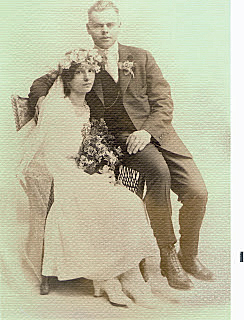
I have not seen a photo of a wedding that occurred in Poruba. This one of Mary Ella Sorokes and Michael Zetts was taken on their wedding day in 1920, in Bradford, Pennsylvania. Mary was my grandfather’s first cousin. Some of the Old Country traditions were carried on in the US, as these two were children of immigrants. Photo courtesy of JWZ.
Young men employed creative ways to show romantic interest toward the young women of Poruba. On May Day eve, they adorned small trees with colored ribbons and placed them on the peak of a special girl’s thatched roof. On May Day morning village girls tried to look casual and indifferent when stepping outside to glance up at the roof. If a boy was no longer friendly with a certain girl, he could express his feelings by putting an old broom on the roof.
Family-made matches were common among Carpatho-Rusyns of Eastern Slovakia, but children did not always abide by their parent’s choices. When a marriage proposal was planned, a representative of the young man’s family brought the boy’s silken handkerchief to the young woman’s home, and left it on the family’s table. If the girl accepted the proposal she kept the handkerchief. Otherwise she sent it back to the boy. Wedding clothes were handmade by the family or by the tailor in Poruba. The clothing was made of white fabric, (probably linen), intricately embellished with embroidery patterns traditional to Poruba.
On their wedding day, the couple took a merry ride through town to the church in a horse-
drawn wagon, though the church was within walking distance. After the wedding, a lively three-day celebration began. Music, dancing, and delicious food drew the villagers together. The festivities were as much for the bridal attendants and guests as for the bride and groom.
Relatives from all over joined with family for wedding feasts. Occasions like these were one of the rare times that family living away were able to be with their loved ones. Travel was difficult on the primitive roads of rural Slovakia, with walking the principle mode of transportation. Horses were beasts of burden needed for field work more than for the convenience of the traveler, unless one was occasionally hitched to a cart to haul a group to their destination.
Baba recalls that her sister Anna married Alex Kovac from their sister Helen’s house, on July 18, 1909. Their father’s brother George Csornej-Maczko, a large, heavy man, came to the celebration from a town called Topolany. Anna’s wedding was one of only three or four times Baba saw her uncle, and Topolany was not far away by our standards, approximately
thirteen miles southwest of Poruba.
Widowhood was prevalent in this part of the Eastern Europe. Life spans were short as recurrent epidemics of cholera, smallpox, scarlet fever and influenza ravaged the residents. The trauma of childbirth took a toll on women, and tuberculosis ruined lives everywhere. A widow required a provider for herself and her children, while it was essential for a widower to have someone care for his home and children while he earned a living. Remarriage after the death of a spouse was almost mandatory for survival, and for some, widowhood was not a one-time experience. Couples who married for the first time around age twenty did not often grow to old age together. Village children sometimes had several families of step-siblings.
In some countries or cultures the widowed were taken care of by extended families. But in a place where early death snatched away the older generation and even siblings, hasty remarriage was the best way for men, women and children to be succored.