Old Valaskovce
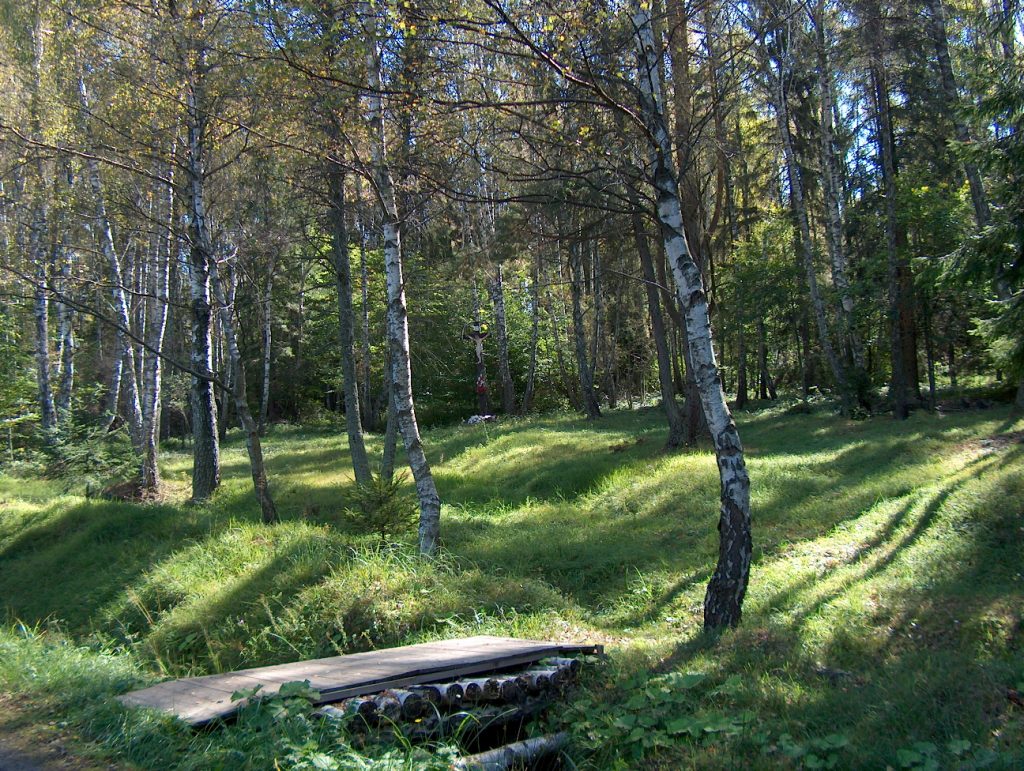
Old Valaškovce was peopled by Carpatho-Rusyn shepherd-farmers who centuries ago dwelt near the settlement of Kiev in modern Ukraine. Folklore tells us they migrated west and south eager for fresh farmland and pasture. They embraced the bucolic remoteness of vale, glen and dell in the sylvan Carpathian Mountains.
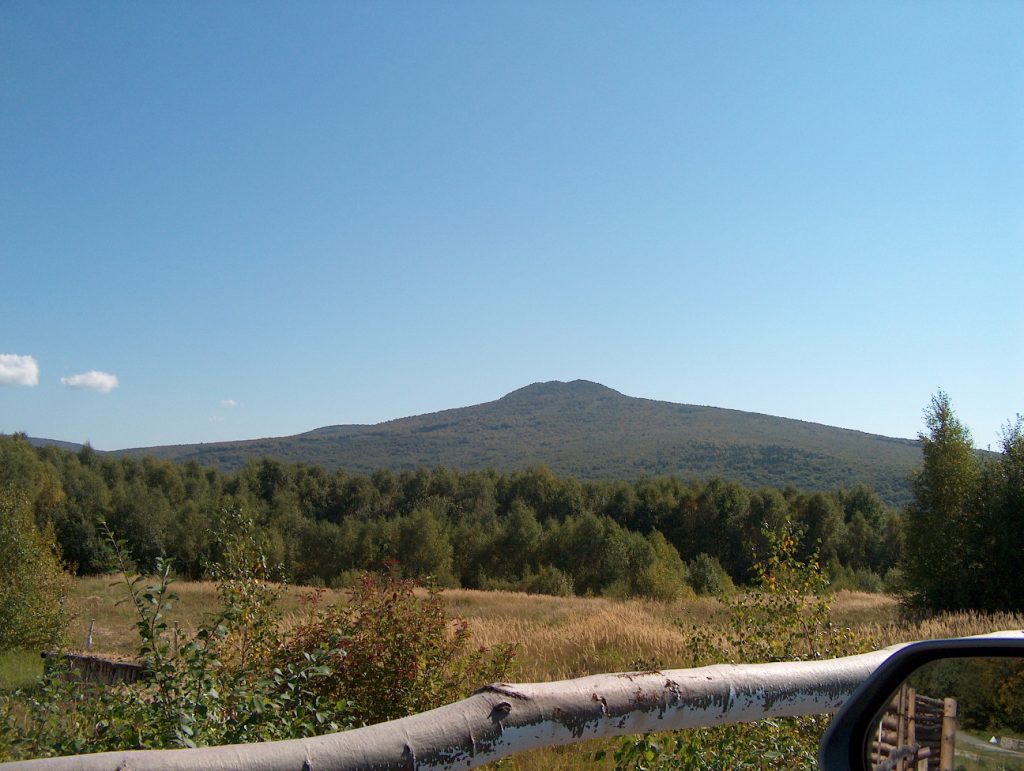
At 2125 feet in elevation, the village lies on the north slope of the extinct volcanic peak called Vihorlat. An early 20th century map shows the area was reached via a road from Humenné to Kamenica nad Cirochou, and from there a winding cart path climbed upwards to the settlement. Similar paths from Modra and Bela on the north, and from Nemecká Poruba and Felso Remete on the south snaked their way up to Valaškovce. The remote village was not a place one would stumble across unintentionally.
For centuries our ancestors eked out a living during mild summers and biting winters. Shepherds tended their sheep while goats and cattle roamed the hills. Tillable fields angled across the vale in every direction. Hazelnuts and berries flourished on the misty hillsides.
Houses in Valaškovce lined both sides of a creek that ran through the village. Most dwellings had one room for living that functioned as both kitchen and sleeping area. Some had a storage area for farm implements and most had an attached barn at one end. Each house held more people than we would consider comfortable. The 1869 Census of the village shows that some houses were inhabited by multiple families, with as many as 14 people under one roof.
A heartbreaking change came to Valaškovce about 1937. With war brewing in Europe, the Czecho-Slovak army required another military installation. The site of Old Valaškovce was selected for its isolation. Villagers were evacuated from their ancestral home and resettled in a section of Humenné called New Valaškovce. Their descendants still populate that corner of Humenné today.
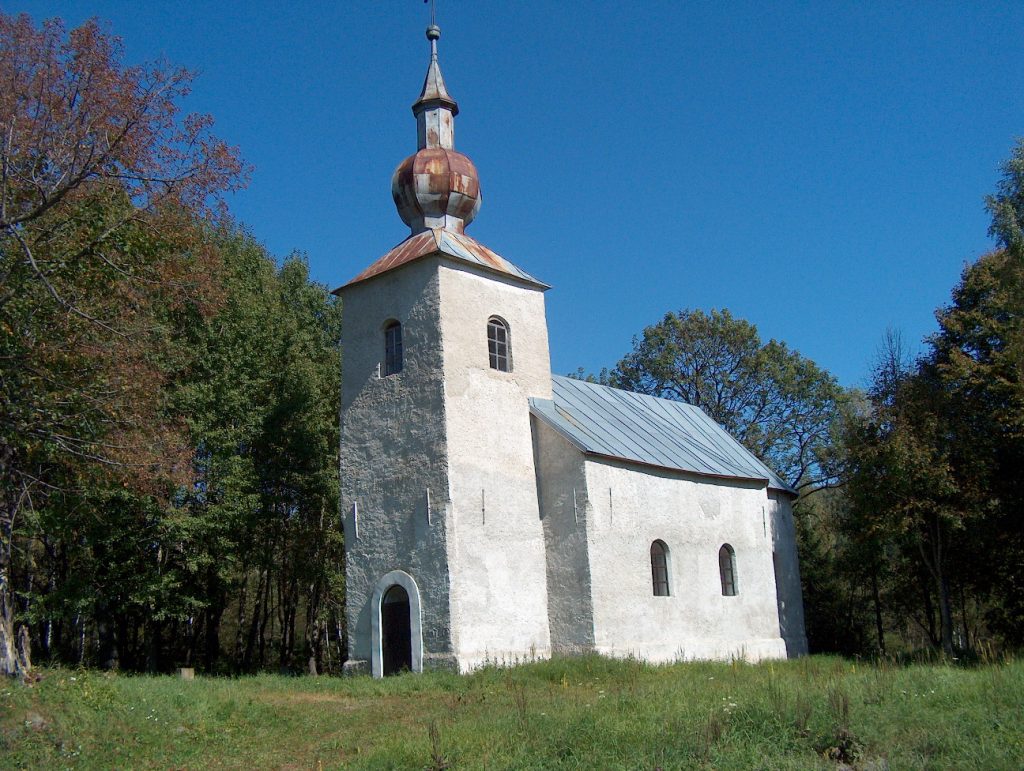
The Greek Catholic Church of St. Peter and Paul is the only vestige of the past in the bygone village. A centuries-old linden tree watches over the church and a spring bubbles nearby. Our ancestors chose a peaceful place for their home.
above photos courtesy of Bob Balog
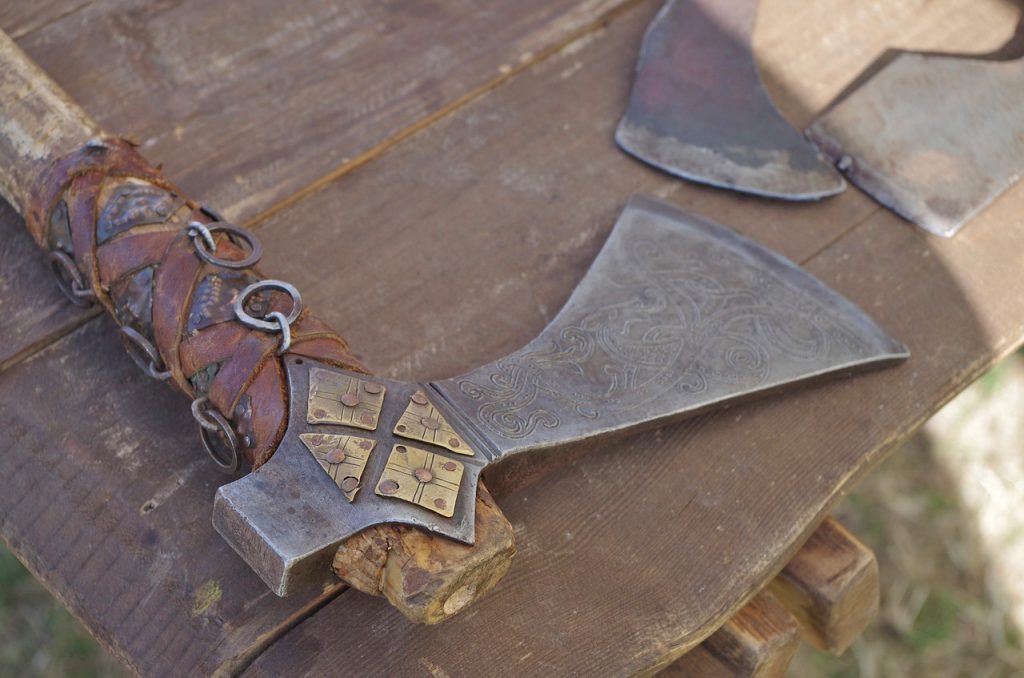
Valaškovce takes its name from a peculiar type of axe used by shepherds called a valašky (pronounced va-lash’-key), similar to the one in this photo. Variations of the village name over several centuries are:
1786 Walaszka, Walaskocz
1808 Valaskocz, Walasskowce
1863, 1888-1902 Valaskoc
1873-1882 Valyaskoc
1920-1937, 1953-present Valaškovce
1907-1913 it was known as Pasztorhegy, which in Hungarian translates to “shepherd mountain”
Surnames of Valaškovce
These surnames are found in the baptism records of the Greek Catholic Church of St. Peter and Paul, which cover the years 1792-1923. An asterisk indicates the name is also found in the 1869 Census of Valaškovce, Zemplen, Austria-Hungary.
A Andruo*, Arcularin, Artim
B Balogh*, Barna*, Barnics, Benyo*, Beszak*, Bihary, Bobik*, Bodnar, Bortnyak*, Brisrik, Bubnas*, Bunda, Butsko
C Csamak*, Csapakov, Csopik*, Csornej*, Czompelyi
D Danhatzer, Delin, Demcsak, Dolinits, Dzudzak, Dzurista, Dluzsanin*
E Erdek
F Fedor, Ferka*, Firda*
G Gajdos, Gancsak, Gerbery, Gergelyi, Gics*, Goidits, Grin*
H Hadvab, Hajcsak*, Harakaly, Herskovics*, Hirjak*, Hlinka, Hlivka, Hodovanecz, Homascr*, Hrubocsak*, Huda, Hvozdovics*
J Jaczkovics*, Jancszin*
K Kalyanin*, Kassai*, Kastyak, Kinyak*, Koban, Kobulniczky, Krajnyik*, Kulysza*, Kundrat
L Lapkov, Latkuvszky, Lecso, Ledov, Lojal, Lukats, Lyitun, Lyubiscsak*
M Mackow, Malik, Matrinov, Matyi*, Maxinczin, Meszaros, Miczikasz*, Mihalits, Mincsik*, Mizsak, Modrjak*
N Novak
O Ohar*, Olexa, Ondzik, Onufer*, Oriscsak, Ozezmjinyan, Oszifat*
P Pajdits*, Pandos*, Paulovcsin*, Petrikovits, Podhajeczky, Polyak*, Projovits
R Rejta, Rojan*, Rojkovics, Roman, Rostik, Rotvanszky
S Salagh, Salak*, Scircsik, Serczanye*, Sircsanin, Sivak*, Sojan*, Sosak, Sramko, Stenko*, Szegeda, Szkvasik, Szorokacs*
T Todor, Tomko, Tutkov*
V Vadszita*, Varocsak*, Vasziletz, Vaszily*, Vaszilyko*
Z Zacharias*, Zajacz, Zavaiszky
A rare photograph of Old Valaškovce
courtesy of Tomas Vasilko of Nitra, Slovakia

The Bubnash Family of House #11 in Valaškovce
The Bubnash family inhabited Valaškovce at least since the early 19th century, and presumably longer. Paul Bubnaš, known as Pal’ovka obder vovka–Paul who fought a wolf–is the furthest back ancestor we know.
One wishes for more details on how he earned the phrase that has stayed with him for nearly 200 years. The Carpathians were home to wolves and brown bears, and a flock of sheep would have been easy pickings for both. Perhaps Paul had more than one encounter with wild animals during the years he herded in the mountains.
Paul and his wife, Mary Kassai, first appear in the parish records in 1835 at the birth of their son George. Though I don’t see her in the records, George’s sister Mary was born about 1852. She is listed as George’s sister on the 1869 Census of Valaskovce, House #11. By that year Paul and Mary had died, she in 1863 at age 58, and Paul the following year, age 60.
In 1858 George Bubnaš married Mary Barna, who was also born in Valaškovce. Of their five sons and two daughters, all except one traveled to the US, caught up in the wave of emigration that promised opportunity and income unavailable at home.
Their oldest child was George, born in 1859. After two working stints in Pennsylvania he returned home to settle permanently in #11, and farmed the family’s acreage.
The second Bubnaš child, Paul, was my great-grandfather. He worked a few years in Pennsylvania, then returned home to marry Mary Szorokacs. They had two children. In 1891 he died in #11 of tuberculosis, age 29. My grandfather was born two months later.
The other three brothers–John, Andrew and Michael, and their sister Mary, worked their way west from Pennsylvania’s Hazleton-area coal mines to the mines of Stockett, Montana. Their sister Anna remained at home to marry John Csornej.
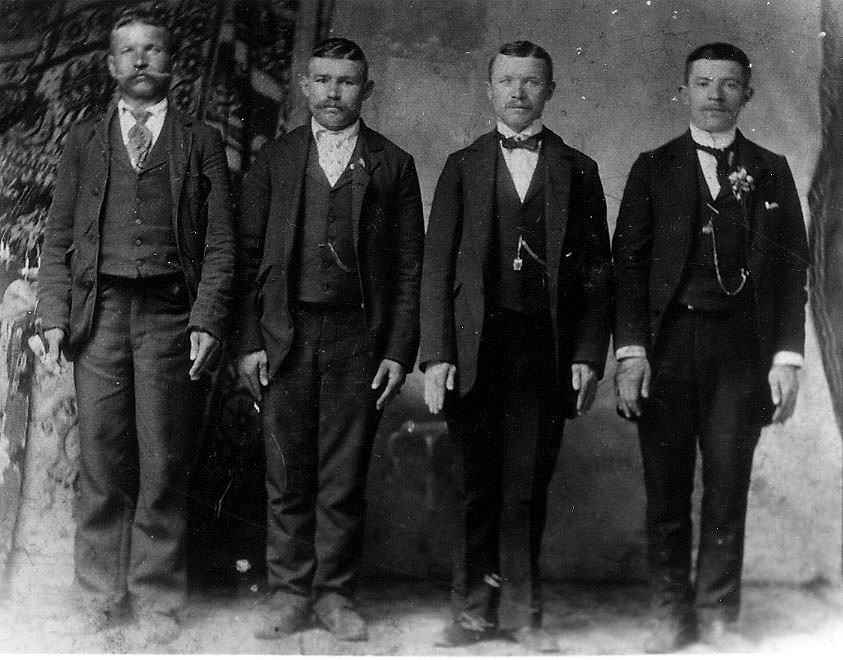
Four of the Bubnash brothers, left to right:
George, 1859-1908; married Anna Oszifat-Kundrat, six children; died in a fall from a hay wagon in Valaškovce
John, 1864-1932; married Suzanna Stenko, thirteen children; died in Hill County, Montana
Andrew, 1867-1939; married Mary Hrapcsak, ten children; died in Cascade County, Montana
Michael, 1873-1923; married Elizabeth Szorokacs, seven children; died in Great Falls, Montana
Family members believe this photo was taken at Michael’s marriage in 1900 in Hazleton Pennsylvania